
Nvidia’s New Framework Takes Center Stage
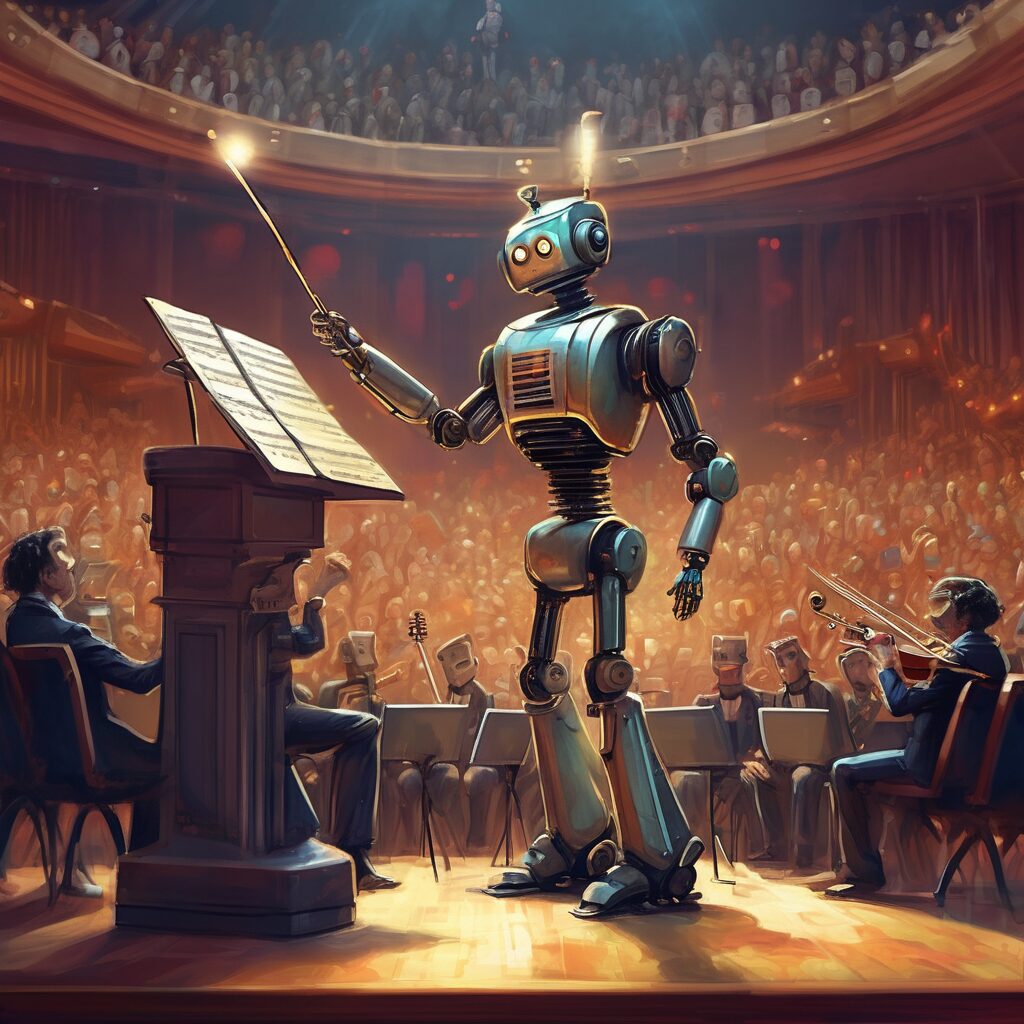
In the ever-evolving symphony of artificial intelligence, Nvidia has just dropped a game-changer—an orchestration tool designed to manage AI tools with the precision of a seasoned conductor. The tech giant introduces a groundbreaking framework that trains an 8-billion-parameter model to seamlessly coordinate complex AI workflows. This isn’t just another incremental update; it’s a full-blown revolution in how AI systems interact with tools, automate tasks, and streamline decision-making.
What makes this framework truly extraordinary is its ability to orchestrate multiple tools as if they were instruments in a grand orchestra. Unlike traditional AI models that struggle with multi-tool integration, Nvidia’s creation excels at dynamically selecting, configuring, and executing the right tools for any given task.
Whether it’s data analysis, content generation, or real-time decision-making, this AI conductor ensures smooth, efficient, and context-aware operations. The implications are vast—businesses, researchers, and developers now have a powerful ally in managing the growing complexity of AI-driven workflows.
Behind the Curtain
At the heart of this innovation lies Nvidia’s 8-billion-parameter model, a behemoth trained to understand and manipulate tools with human-like intuition. The framework doesn’t just rely on brute computational power; it leverages advanced techniques like reinforcement learning and multi-modal prompting to refine its decision-making.

The Ultimate Tool Orchestrator
The training process is meticulously designed to simulate diverse scenarios, ensuring the model can handle everything from simple queries to highly specialized tasks.
This means the model doesn’t just follow rigid instructions—it learns, adapts, and optimizes its approach based on real-world feedback. For instance, imagine an AI assistant that doesn’t just fetch data but also analyzes it, generates insights, and even suggests actionable strategies—all while dynamically switching between tools like a virtuoso.
Nvidia’s framework achieves this by treating tools as modular components, each with its own strengths, and seamlessly stitching them together into cohesive workflows. This level of orchestration eliminates the fragmentation that often plagues AI systems, where tools operate in silos without clear communication.
The Future of AI Workflows
The launch of Nvidia’s orchestration tool marks a pivotal moment in AI development, signaling a shift toward more intelligent, adaptive, and efficient systems. For enterprises, this means reduced operational overhead, as AI-driven processes become more autonomous and self-optimizing. Developers, on the other hand, gain access to a powerful toolkit that simplifies the integration of disparate AI models and services, accelerating innovation cycles. The framework’s ability to manage tools like a pro also opens doors for new applications in fields like healthcare, finance, and autonomous systems, where precision and reliability are paramount.
A Symphony of Efficiency and Innovation
Looking ahead, Nvidia’s innovation could set a new standard for AI orchestration, inspiring competitors to push the boundaries of what’s possible. As the model continues to evolve, we can expect even greater sophistication in how AI systems interact with the world—blurring the lines between human expertise and machine intelligence. One thing is certain: the era of fragmented, inefficient AI tools is fading. In its place, we’re witnessing the rise of a new paradigm—one where AI doesn’t just assist but conducts, harmonizing tools into a seamless, high-performance orchestra.